Most people don't go looking for a plumber until water is already on the floor. That's exactly when it's hardest to think clearly, and exactly when it's easiest to hire the wrong person.
A good plumber fixes the problem once, charges what they quoted and leaves your home the way they found it. A bad one can turn a simple leak into a week of callbacks, surprise charges and drywall repairs. The difference usually comes down to a few minutes on the phone before anyone shows up.
Below are the 10 questions we would ask any plumber before letting them in the door. Save this page now, so it's ready the next time something drips, clogs or bursts.
1. Are You Licensed to Work in My State?
Plumbing licenses are handled differently depending on where you live. Some states license plumbers at the state level, while others leave it to cities or counties. Either way, a licensed plumber has met training and testing requirements and is expected to follow local plumbing codes.
Ask for the license number, then look it up on your state or local licensing board website. It takes two minutes. If someone dodges the question or tells you a license isn't needed for "small jobs," treat that as your answer.
2. Do You Carry Liability Insurance and Workers' Compensation?
Plumbing involves water, gas lines, torches and tight spaces. Accidents happen. Liability insurance covers damage to your home if something goes wrong, and workers' compensation covers the plumber's crew if someone gets hurt on your property. Without it, you could end up paying for both.
A professional plumber won't mind sending a certificate of insurance before the job starts. Make sure it's current and in the company's name.
3. How Long Have You Been Doing This Kind of Work?
Years in business matter, but so does the type of experience. Someone who mostly clears drains may not be the best pick for a sewer line replacement or a tankless water heater install. Ask how often they handle jobs like yours, and whether they mainly work in homes or commercial buildings.
Local experience counts too. A plumber who has worked in your area for years will know the common problems with older homes nearby, the local code rules and where to get parts quickly.
4. Can I Get a Written Estimate Before You Start?
A number given over the phone is a guess, not a quote. A reliable plumber will look at the problem first, then give you a written estimate that lists labor, parts and any extra fees. For bigger jobs, get two or three estimates so you know what fair pricing looks like in your area.
Also ask how they charge. Some plumbers use flat rate pricing, where you pay one set price for the whole job. Others charge by the hour plus parts. Neither is wrong, but you should know which one you are agreeing to, and what happens if the job turns out bigger than expected.
5. Do You Charge a Service Call or Trip Fee?
Many plumbers charge a fee just to come out and diagnose the problem. Some apply it toward the repair if you hire them, and some don't. It's a fair charge, but it shouldn't be a surprise on the final bill. Ask about it upfront so you can compare plumbers on the full cost, not just the hourly rate.
6. Who Will Actually Come to My Home?
The person you talk to on the phone may not be the one who shows up. Ask whether the work will be done by a licensed plumber, an apprentice working under supervision or a subcontractor. It's also fair to ask whether the company runs background checks on its technicians, especially if someone will be in your home while you're at work or around your kids.
7. What Do You Charge for Emergency or After Hours Calls?
Pipes don't burst on a schedule. If you need help at night, on a weekend or on a holiday, expect to pay more. The real question is how much more. Some plumbers add a flat emergency fee, while others charge a higher hourly rate.
Find this out before you need it. Better yet, save the number of a trusted local plumber who offers emergency service, so you're not picking someone at random at 2 a.m. while water spreads across the kitchen.
8. Will You Pull Permits If the Job Needs Them?
Some plumbing work, such as replacing a water heater, moving gas lines, adding a bathroom or repiping a house, often needs a permit and an inspection. A plumber who skips permits to save time can leave you with problems later, when you sell your home or file an insurance claim.
Ask who is responsible for getting permits and whether the cost is included in the estimate. A reliable plumber will know the local rules and handle them as part of the job.
9. Do You Guarantee Your Parts and Labor?
Good plumbers stand behind their work. Ask how long their warranty on labor lasts, and whether the parts and fixtures they install come with a manufacturer warranty. Get the details in writing. If a repair fails a month later, you want to know whether the return visit is free.
10. Can I See Reviews or Talk to Past Customers?
Reviews tell you what it's actually like to work with someone. Look for patterns rather than single comments. Do customers mention that the plumber showed up on time? Was the pricing clear? Did they clean up afterward? And how does the plumber respond when someone leaves a bad review?
A steady stream of recent reviews is usually a better sign than a handful of perfect ones from years ago. For bigger projects, it's fair to ask for a reference or two from past customers who had similar work done.
Red Flags to Watch For
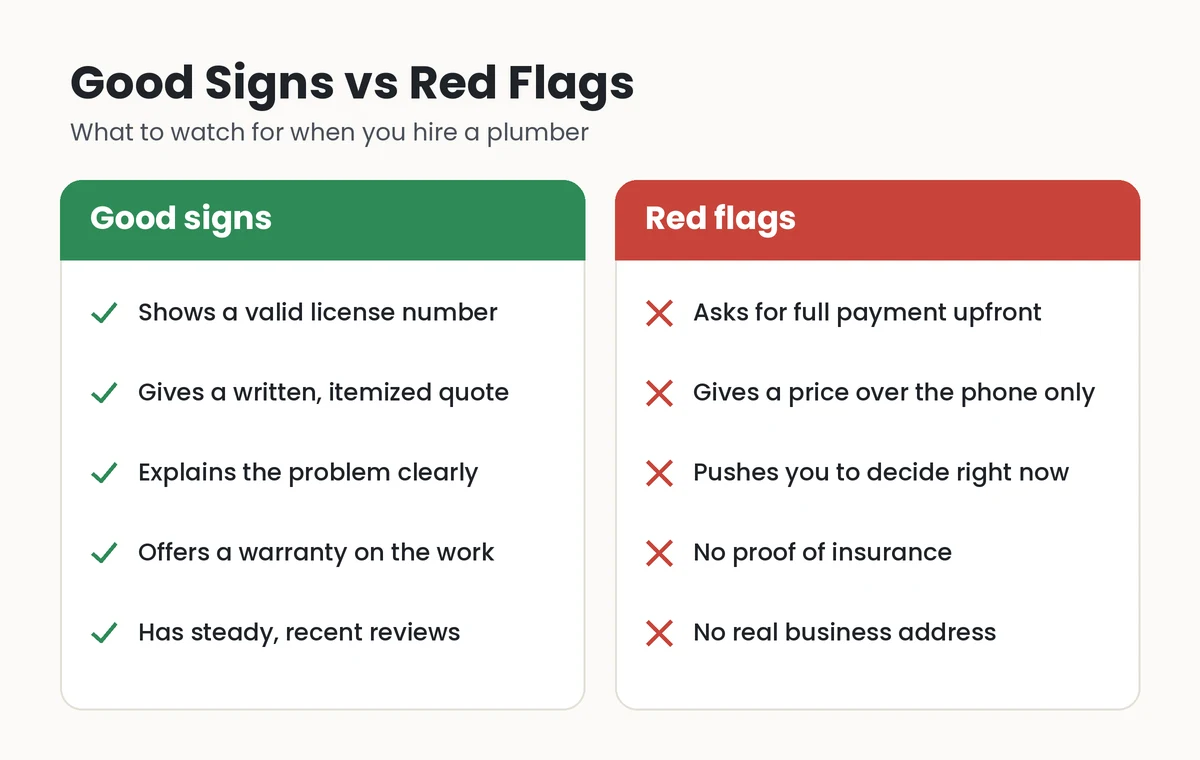
Even after asking all the right questions, trust your gut. Be careful if a plumber:
- Asks for full payment before any work begins
- Won't put the estimate in writing
- Pressures you to decide on the spot or pushes extra work you didn't ask for
- Can't show a license number or proof of insurance
- Has no real business address, website or reviews
- Quotes a price far lower than everyone else
A small deposit for a large project or special order parts can be normal. Paying the full amount upfront for a simple repair is not.
Quick Checklist Before You Hire
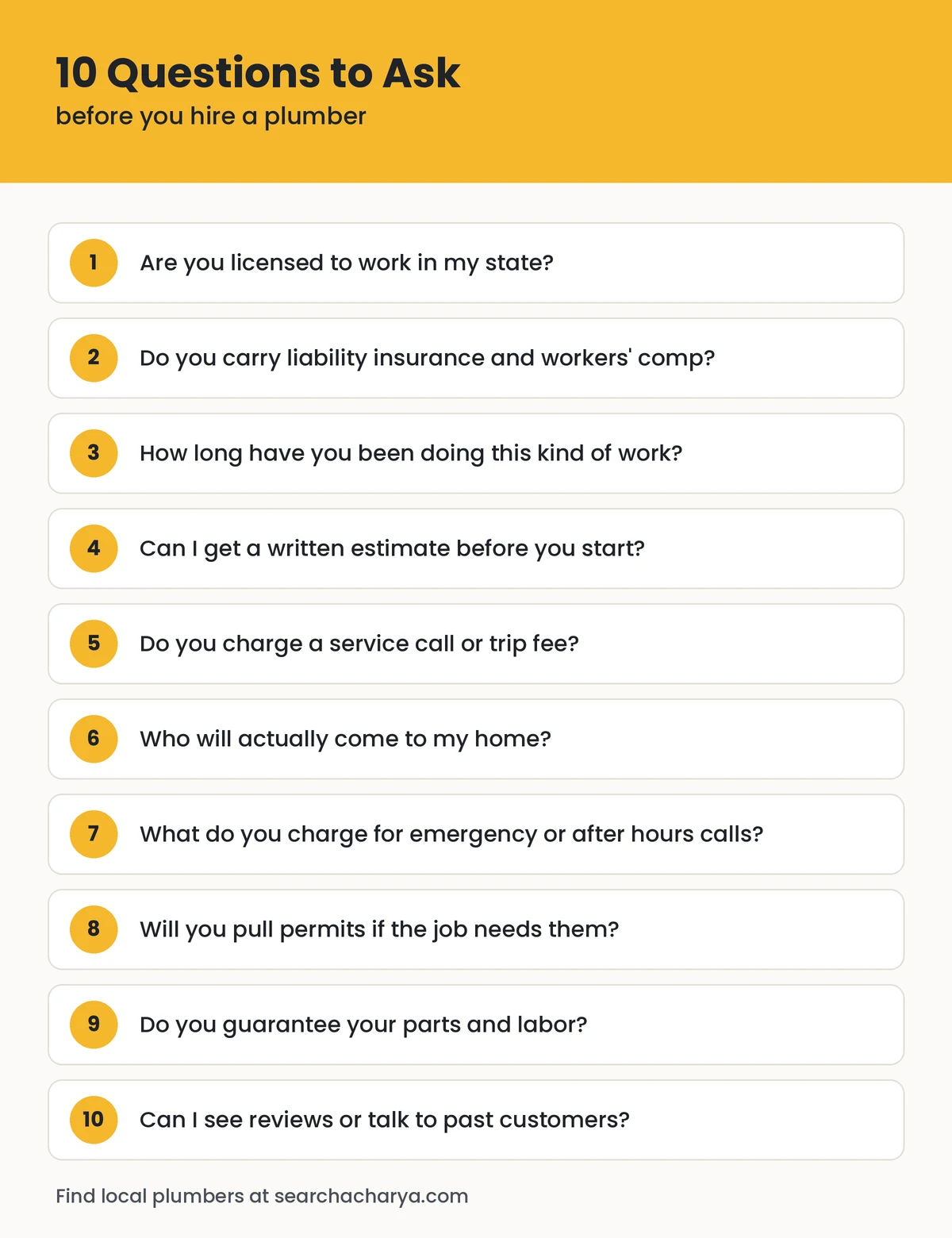
Here are all 10 questions in one place. Save the image on your phone or print it and stick it on the fridge, so it's there when you need it.
Frequently Asked Questions
How do I know if a plumber is licensed?
Ask the plumber for their license number, then check it on your state or local licensing board website. The listing should show whether the license is active and what type of work it covers.
How many quotes should I get from plumbers?
For larger jobs like a water heater replacement or repiping, two or three written quotes is a good rule. In an emergency you may not have time to compare, but you should still agree on the price before any work starts.
Is it normal for a plumber to charge a service call fee?
Yes. Many plumbers charge a service call or trip fee to come out and diagnose the problem. Ask about it upfront and find out whether it gets credited toward the repair if you hire them.
Should I pay a plumber upfront?
Avoid paying the full amount before the work is done. A small deposit for bigger projects or special order parts is common, but the balance should be paid once the job is finished and you are happy with it.
What should I do while waiting for an emergency plumber?
Turn off your main water shutoff valve to stop the flow, switch off the water heater if the leak is near it, move valuables away from the water and take photos of any damage for your insurance company.
Find a Reliable Plumber Near You
Asking these 10 questions takes about ten minutes, and it can save you a lot of money and stress. Start with a short list of local plumbers, call two or three of them, and go with the one who answers clearly and puts everything in writing.
You can browse trusted plumbers in your city on Search Acharya. Each listing shows services, hours, phone numbers and reviews from real customers, so you can compare your options in one place and call the right plumber with confidence.