How to Choose the Right Personal Injury Lawyer
Published 2 October 2026
Learn how to choose the right personal injury lawyer. This guide covers the qualities to look for, how contingency fees work, 10 questions to ask in your free consultation, red flags to avoid and simple steps to hire with confidence.
Why Choosing the Right Lawyer Matters
The right personal injury lawyer is someone who handles injury cases every day, has a clear record of results, explains fees in writing and actually returns your calls. Get those four things right and you have done most of the hard work.
After an accident, life gets messy fast. There are hospital visits, missed work, calls from insurance adjusters and a pile of paperwork you never asked for. In the middle of all that, you also have to pick a lawyer. It feels like one more job on a long list, but it is probably the decision that shapes your claim the most.
A good lawyer can mean a fair settlement that covers your medical bills, lost income and pain. A poor fit can mean a rushed deal, missed deadlines and money left on the table. This guide walks you through exactly what to look for, what to ask and what to avoid, in plain language.
What Does a Personal Injury Lawyer Actually Do?
A personal injury lawyer helps you get compensation when someone else's carelessness causes you harm. That covers car and bike accidents, slips and falls, medical negligence, workplace injuries, dog bites and faulty products.
In practice, their work usually includes:
- Collecting evidence such as police reports, photos, CCTV footage and witness statements
- Working with doctors to document your injuries and future treatment needs
- Calculating the full value of your claim, including lost wages and pain and suffering
- Handling every conversation with the insurance company so you do not say something that hurts your case
- Negotiating a settlement, and taking the case to court if the offer is too low
Knowing this helps you judge a lawyer properly. You are not just hiring someone to fill in forms. You are hiring someone to investigate, negotiate and, if needed, fight.
7 Qualities to Look for in a Personal Injury Lawyer
1. They focus on personal injury law
Law is a wide field. A lawyer who handles property deals on Monday and divorces on Tuesday will not know injury law as deeply as someone who does it full time. Ask what share of their cases are personal injury. Ideally, it should be most of them.
2. They have handled cases like yours
A truck accident is very different from a medical negligence claim. Each has its own rules, experts and evidence. Ask how many cases similar to yours they have handled in the last few years and how those turned out.
3. They have a real track record
Look for settlements and verdicts they can talk about openly. Past results never guarantee your outcome, but a lawyer with no wins to point to is a risk you do not need to take.
4. They are ready to go to trial
Most injury cases settle out of court. Still, insurance companies know which lawyers fold and which ones fight. A lawyer with real courtroom experience usually gets better offers, simply because the other side takes them seriously.
5. They have the resources to build your case
Strong cases often need accident reconstruction experts, medical specialists and investigators. These cost money upfront. Ask whether the firm can cover these costs while the case is ongoing.
6. They communicate clearly
Pay attention to how they treat you in the first meeting. Do they explain things in simple words? Do they listen, or do they rush you? Ask who will handle your case day to day and how quickly they reply to messages.
7. They have a good reputation
Read online reviews on Google and legal directories, and check with your local bar council or bar association for any disciplinary record. Reviews that mention honesty and regular updates matter more than ones that only say "great lawyer."
How Personal Injury Lawyer Fees Work
Most personal injury lawyers work on a contingency fee. This means you pay nothing upfront, and the lawyer takes an agreed percentage of the money you recover. If you get nothing, you usually owe no fee.
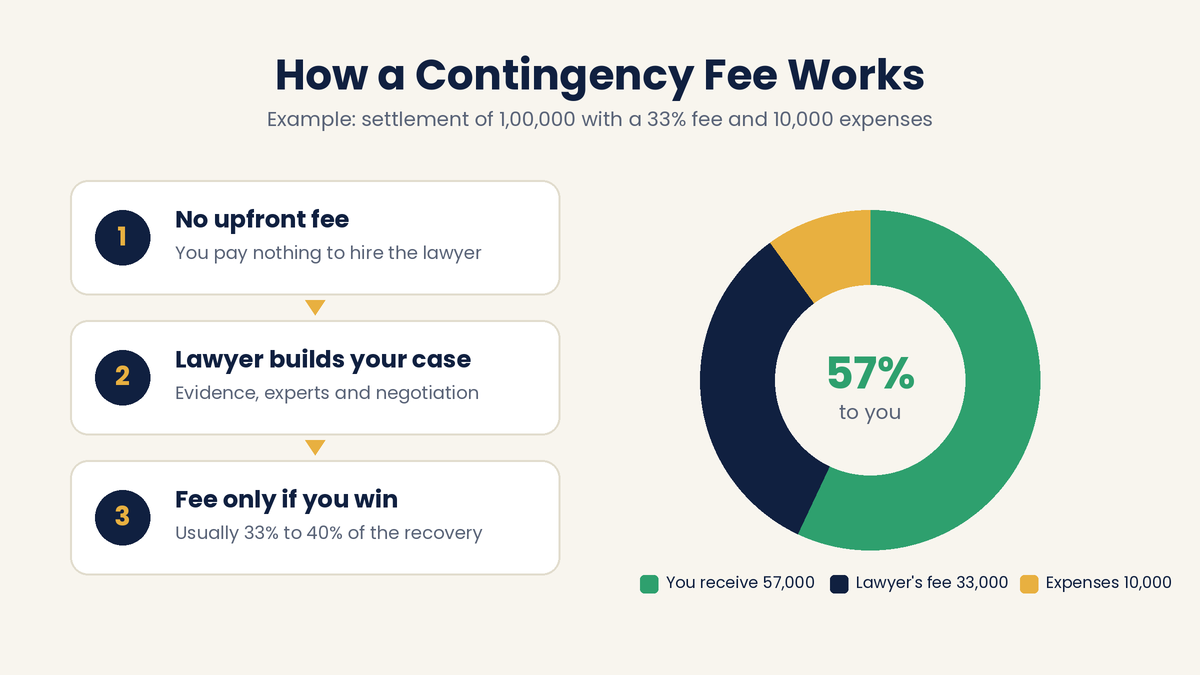
In many places, the usual range is about 33% to 40% of the settlement, sometimes rising if the case goes to trial. Rules and caps differ by country and state, so always confirm what applies where you live.
The percentage is only half the story. Ask these follow up points before you sign:
- Is the fee taken before or after case expenses are deducted?
- Who pays for expert reports, court fees and medical records if you lose?
- Does the percentage change if the case goes to trial or appeal?
- Can I get the full fee agreement in writing?
Here is a simple example on a settlement of 1,00,000 with 10,000 in case expenses and a 33% fee:
| Fee worked outLawyer's feeExpensesYou receive | |||
| Fee taken before expenses | 33,000 | 10,000 | 57,000 |
| Fee taken after expenses | 29,700 | 10,000 | 60,300 |
The same 33% can leave you with noticeably different amounts, which is why the fine print matters.
10 Questions to Ask in Your Free Consultation
Most injury lawyers offer a free first meeting. Treat it like an interview, because that is exactly what it is. Take this list with you:

- How many years have you practised personal injury law?
- How many cases like mine have you handled, and what were the results?
- Will you personally handle my case, or will it go to a junior lawyer?
- What do you think my case is worth, and why?
- What are the weak points in my case?
- How long do cases like mine usually take?
- What is your fee, and how are expenses handled?
- Have you taken cases like mine to trial?
- How often will you update me, and how do I reach you?
- Is there a deadline for filing my claim?
Listen closely to question 5. An honest lawyer will tell you about the risks. Someone who only paints a rosy picture may be more interested in signing you than in winning for you.
Red Flags to Avoid
Some warning signs are easy to spot once you know them. Walk away if a lawyer:
- Promises a specific amount or a guaranteed win. No honest lawyer can promise the outcome of a case.
- Contacts you first at the hospital or right after the accident. This kind of chasing is unethical and banned in many places.
- Asks for a big fee upfront for a standard injury claim.
- Will not put the fee agreement in writing.
- Pushes you to settle quickly before your treatment is finished and your injuries are fully understood.
- Is hard to reach even before you have hired them. It rarely gets better later.
- Cannot clearly explain how they will handle your case.
Trust your gut too. If something feels off in the first meeting, it probably is.
Step by Step: How to Find and Hire the Right Lawyer
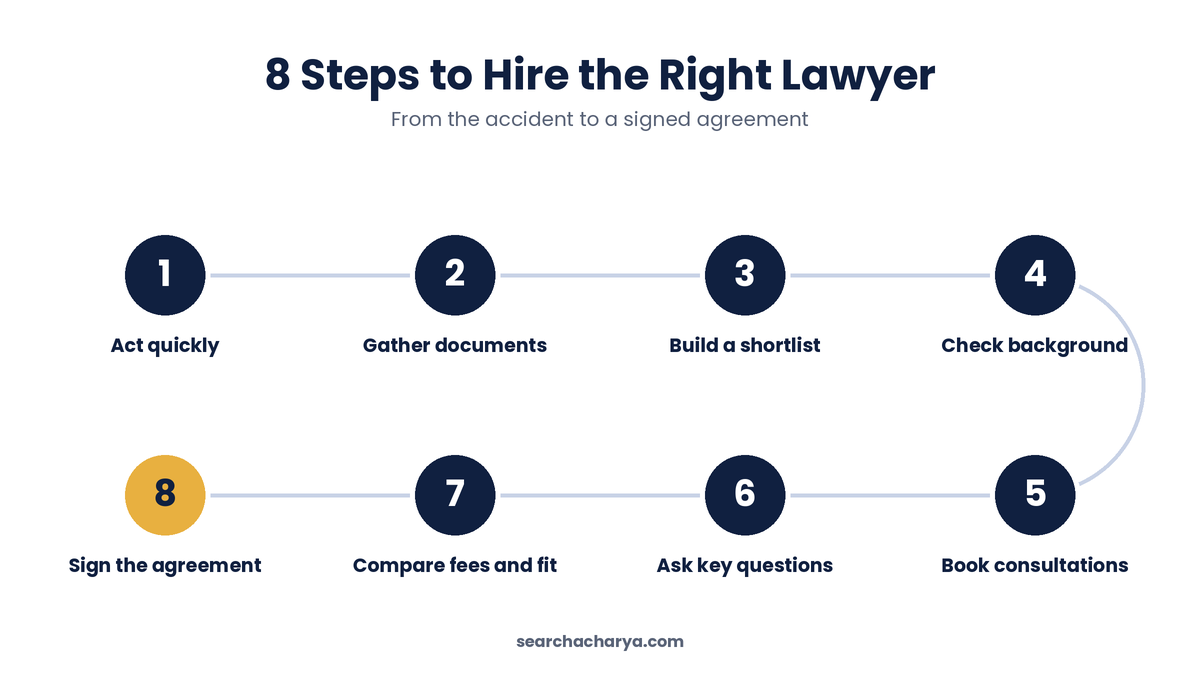
- Act quickly. Every injury claim has a time limit for filing, and evidence fades fast. Start your search within days, not months.
- Gather your documents. Keep medical records, bills, photos, the police report and any letters from insurers in one folder.
- Build a shortlist of three to five lawyers. Ask friends and family for referrals, check online reviews and look at bar association directories.
- Check their background. Look at their website, case results and any disciplinary history.
- Book free consultations. Meet at least two or three lawyers so you can compare them.
- Ask the 10 questions above and take notes during each meeting.
- Compare fees and fit. Look beyond the percentage. Think about who explained things best and who you felt comfortable with.
- Read the agreement carefully and sign. Make sure every promise about fees and costs is written down.
This whole process can usually be done in a week or two, and it is worth every hour.
Frequently Asked Questions
How do I choose a good personal injury lawyer?
Choose a lawyer who focuses mainly on personal injury, has handled cases like yours, can show past results, works on a clear written contingency fee and communicates well. Meet two or three before deciding.
Do I really need a lawyer for a personal injury claim?
For minor injuries with no lasting effects, you may be able to handle the claim yourself. For serious injuries, disputed fault or a lowball insurance offer, a lawyer usually helps you recover far more than you could alone.
How much does a personal injury lawyer cost?
Most charge a contingency fee, commonly around 33% to 40% of the amount recovered, with nothing to pay upfront. The exact rate depends on the lawyer, the case and local rules.
How long does a personal injury case take?
Simple cases can settle within a few months. Complex cases, or those that go to trial, can take a year or more.
When should I contact a personal injury lawyer?
As soon as possible after getting medical care. Early contact protects evidence and keeps you well within the filing deadline.
Should I talk to the insurance company before hiring a lawyer?
Give only basic facts and avoid recorded statements or signing anything. Adjusters may use your words to reduce your claim, so it is safer to let your lawyer do the talking.
Final Thoughts
Choosing the right personal injury lawyer comes down to a few simple checks: focus, experience, results, honest fees and good communication. Take your time with the consultations, ask direct questions and never sign anything you do not fully understand.
Your recovery should be your main job right now. The right lawyer takes the legal stress off your shoulders so you can focus on getting better.
Found this guide useful? Share it with someone who has recently been in an accident, and explore more practical guides on Search Acharya. For questions, write to us at support@searchacharya.com.
Disclaimer: This article is for general information only and is not legal advice. Laws and fee rules vary by location, so please speak with a qualified lawyer about your specific situation.