
Every home depends on a safe and reliable electrical system. When an outlet stops working, a breaker keeps tripping or you want to add new lighting, hiring a professional electrician is usually the right step. Before you book an appointment, though, it helps to know what the work is likely to cost.
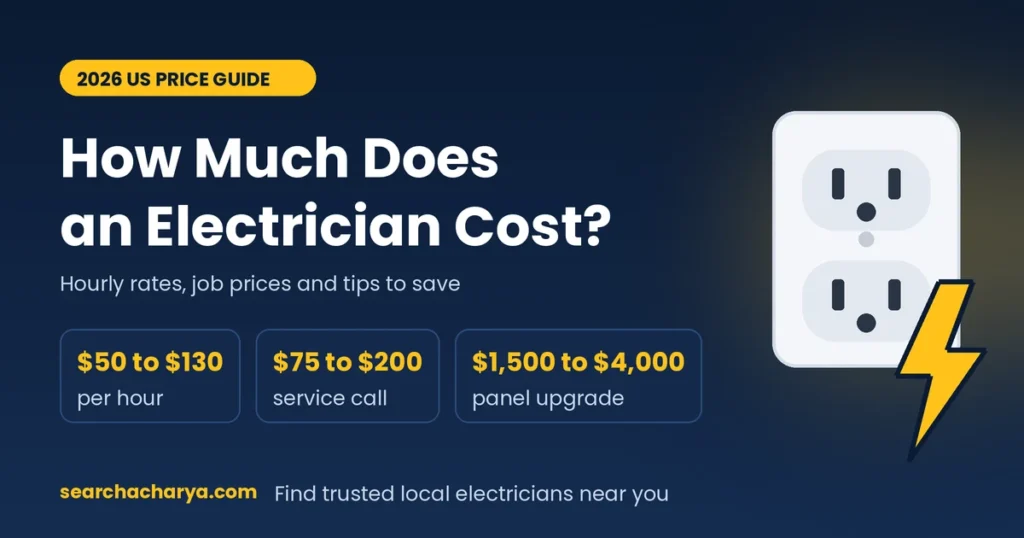
In the United States, most homeowners pay around $50 to $130 per hour for an electrician. Many companies also charge a service call fee for the first visit. A small repair may cost a little over a hundred dollars, while larger projects like a panel upgrade or rewiring a home can cost several thousand.
This guide explains typical electrician prices, the factors that affect your bill and simple ways to manage the cost without cutting corners on safety.
Average Electrician Cost in the US
Electricians usually price their work in one of two ways. They either charge an hourly rate, which is common for repairs and troubleshooting, or they give a fixed price for a clearly defined job such as an installation.
The table below shows typical price ranges for common electrical services.
| Electrical Service | Typical Cost |
|---|---|
| Electrician hourly rate | $50 to $130 |
| Service call or diagnostic fee | $75 to $200 |
| Outlet or switch replacement | $100 to $250 |
| New outlet installation | $150 to $400 |
| Ceiling fan installation | $150 to $400 |
| Light fixture installation | $100 to $300 |
| Circuit breaker replacement | $100 to $300 |
| Dedicated circuit installation | $250 to $900 |
| EV charger installation | $500 to $1,500 |
| Electrical panel upgrade | $1,500 to $4,000 |
| Whole house rewiring | $4,000 to $12,000 or more |
| Emergency electrician visit | $150 to $400 or more |
These figures are general estimates for planning purposes. Your actual price will depend on your location, the materials used, access to the wiring, permit requirements and the full scope of the job.
What Affects the Cost of an Electrician?
No two electrical jobs are exactly alike. Knowing what drives the price will help you understand your estimate and compare quotes fairly.
1. The Type of Job
The work itself has the biggest impact on cost. Swapping a broken switch is quick and simple. Running a new circuit, installing an EV charger or upgrading a panel takes far more time, skill and material.
Jobs that involve tracking down a hidden fault or working with old wiring can also take longer than expected, which raises the labor cost.
2. License Level and Experience
In the US, electricians are licensed at different levels, usually apprentice, journeyman and master. A master electrician generally charges the highest rate, but is also qualified to handle complex work and pull permits.
Paying for an experienced, licensed professional often saves money over time because the job is done correctly the first time.
3. Your Location
Electrician rates differ widely from one part of the country to another. Large metro areas such as New York, Los Angeles, San Francisco and Northern Virginia tend to have higher rates, while smaller towns and many parts of the South and Midwest are more affordable.
Local demand, cost of living, travel distance and city regulations all play a part in the final price.
4. Materials and Parts
Most estimates include the cost of wire, outlets, switches, breakers, junction boxes and other supplies. Basic parts are inexpensive, but smart switches, designer light fixtures and new panels can add significantly to the total.
5. Permits and Inspections
Larger jobs, such as panel upgrades, new circuits and rewiring, usually require a permit from your city or county. Permit fees vary by location but commonly fall somewhere between $75 and a few hundred dollars. A licensed electrician will normally handle the permit process for you.
6. Emergency and After Hours Service
Calling an electrician at night, on a weekend or during a holiday will cost more than a scheduled appointment. Emergency rates are often 1.5 to 2 times the regular hourly rate, and some companies add an extra call out charge.
If you notice sparks, smoke or a burning smell, turn off power at the breaker if it is safe to do so and call for help right away. Safety should always come before cost.
Electrician Cost by Type of Job
Outlet Replacement and Installation
Replacing an existing outlet usually costs $100 to $250. Adding a new outlet where wiring is already nearby typically costs $150 to $400. If the electrician has to run a new circuit from the panel, the price can be higher because more labor and wall work are involved.
GFCI outlets, which are required in kitchens, bathrooms, garages and outdoor areas under most US codes, may cost slightly more than standard outlets.
Ceiling Fan Installation
Installing a ceiling fan generally costs $150 to $400. If there is already a light fixture with a suitable box in place, the job is usually straightforward. Costs rise if a fan rated box must be installed, new wiring is needed or the ceiling is high or hard to reach.
Light Fixture Installation
Replacing a light fixture typically costs $100 to $300. Adding a fixture in a brand new location, installing recessed lights or hanging a heavy chandelier can require extra time and materials.
Circuit Breaker Replacement
Replacing a single circuit breaker usually costs $100 to $300. If a breaker trips often, the electrician should find out why before replacing it. Frequent tripping can point to an overloaded circuit, a faulty appliance or damaged wiring.
EV Charger Installation
Installing a Level 2 EV charger at home typically costs $500 to $1,500, not including the charger itself in some cases. If your current panel does not have enough capacity, you may also need a panel upgrade, which adds to the total.
Electrical Panel Upgrade
Upgrading an electrical panel, often from 100 amps to 200 amps, generally costs $1,500 to $4,000. Many older homes need an upgrade before adding central air, an EV charger, a hot tub or other large appliances. The price can increase if utility coordination, a new meter base or grounding improvements are required.
Whole House Rewiring
Rewiring an entire home usually costs $4,000 to $12,000 or more. The price depends on the size and age of the home, how many circuits are needed and how easy it is to access the walls and ceilings. Homes with outdated knob and tube or aluminum wiring often need this work to meet current safety standards.
How Much Does an Electrician Charge Per Hour?
Across most US markets, electricians charge between $50 and $130 per hour. Apprentices are at the lower end, journeymen fall in the middle and master electricians are at the higher end. Rates in major cities can go above this range.
Keep in mind that the hourly rate often does not include the service call fee, materials or permits.
Example: An electrician charges $85 per hour and spends two hours fixing a faulty circuit. The labor comes to $170. If there is also a $100 service call fee and $35 in parts, your total would be $305 before any taxes.
Many electricians also have a one hour minimum charge, so even a very short job will usually be billed for at least one full hour.
Tips to Save Money on Electrical Work
Electrical work is not the place to cut corners, but there are smart ways to keep your costs under control.
Get several written quotes. For bigger jobs, ask two or three licensed electricians for estimates. Compare what each quote includes, such as materials, permits, warranty and cleanup, not just the final number.
Combine small jobs into one visit. Since most electricians charge a service call fee, having several small tasks done at once is usually cheaper than booking separate visits.
Plan ahead for big upgrades. If you expect to add an EV charger, a heat pump or a large appliance in the future, consider upgrading your panel at the same time to avoid paying for two major projects.
Book during regular business hours. Unless it is a true emergency, scheduling work on a weekday helps you avoid higher after hours rates.
Check for rebates. Some states and utility companies offer rebates for EV chargers, panel upgrades and energy efficient improvements. Check with your utility provider before starting the work.
Clear the work area. Make sure the electrician can easily reach the panel, outlets or fixtures. Less setup time means less labor on your bill.
Avoid risky DIY repairs. Working with live wires can cause serious injury, fire or code violations. Leave electrical repairs to a qualified professional.
How to Choose the Right Electrician
The cheapest quote is not always the best value. A good electrician should explain the problem clearly, recommend a sensible solution and give you a written estimate before starting major work.
Before hiring, keep these points in mind:
- Confirm that the electrician holds a valid license in your state.
- Ask for proof of liability insurance and workers’ compensation coverage.
- Read recent reviews from customers in your area.
- Request a written estimate that lists labor and materials separately.
- Ask about warranties on both labor and parts.
- Confirm whether permits and inspections are included.
- Make sure any extra charges are explained and approved before the work continues.
Be careful with quotes that are much lower than others. They may leave out important work, skip permits or use lower quality materials.
Frequently Asked Questions
How much does an electrician cost for a small job?
A small job, such as replacing a switch or outlet, usually costs $100 to $250 including the service call. More complex repairs can cost more depending on the time and materials needed.
Do electricians give free estimates?
Many electricians offer free estimates for larger projects like panel upgrades or rewiring. For repairs and troubleshooting, a diagnostic or service call fee is common. Always ask about fees when you schedule the visit.
Is it better to pay by the hour or a flat rate?
Hourly pricing works well for troubleshooting, when the cause of a problem is unknown. A flat rate is often better for installations with a clear scope because you know the total cost in advance.
How much does an emergency electrician cost?
An emergency electrician visit usually costs $150 to $400 or more, depending on the time, your location and the repair needed. Parts and larger repairs are often billed separately.
Do I need a permit for electrical work?
Permits are usually required for panel upgrades, new circuits, EV chargers and rewiring. Simple replacements, such as swapping an outlet or light fixture, often do not need one. Rules vary by city and state, so check with your local building department or ask your electrician.
Does homeowners insurance pay for electrical repairs?
Homeowners insurance may cover electrical damage caused by a covered event, such as a fire or lightning strike. Normal wear and tear, old wiring and routine maintenance are usually not covered. Check your policy or speak with your insurance provider for details.
Final Thoughts
The cost of hiring an electrician depends on the job, your location and the condition of your home’s electrical system. Small repairs may cost only a few hundred dollars, while panel upgrades, EV charger installations and whole house rewiring require a larger budget.
To get the best value, describe the problem clearly, compare a few written estimates and make sure you understand what each quote includes. Hiring a licensed and insured electrician helps protect your home, your family and your investment.
If you need a trusted electrician near you, Search Acharya makes it easy to browse local business listings, compare electrical service providers and find contact details in one place. Reach out to professionals in your area and request a quote for your project today.