
Your roof protects everything under it, so the contractor you hire really matters. A good roofer does the job right, cleans up, and stands behind the work for years. A bad one can leave you with leaks, voided warranties and a half finished job.
This guide shows you how to choose a roofing contractor step by step: what to check, what to ask, what a new roof usually costs and which warning signs mean you should keep looking.
What should you look for in a roofing contractor?
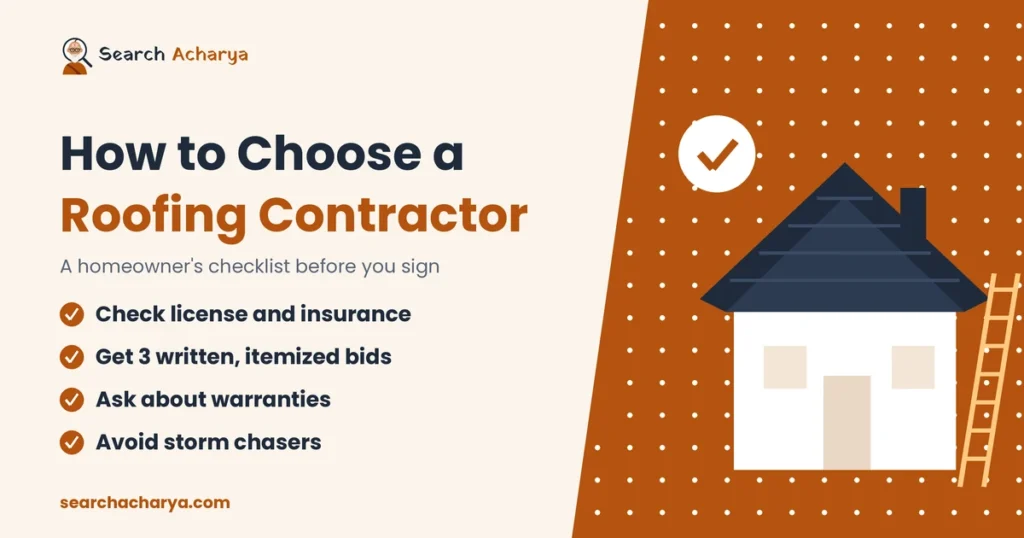
Look for a roofing contractor with a local address, a valid license where your state requires one, general liability and workers’ compensation insurance, a detailed written estimate and a clear workmanship warranty. Strong local reviews and manufacturer certification are also good signs that the company does quality work.
The cheapest bid isn’t always the best deal. Roofing problems often don’t show up until the next big storm, and by then a fly by night company may be long gone.
Step 1: Start with local roofers
Local contractors know your area’s weather, building codes and permit process. They also have a reputation to protect in the community, and they’ll be around if a problem pops up a year later.
To build your shortlist:
- Ask neighbors, friends and coworkers who recently replaced their roofs.
- Browse local roofing contractors on Search Acharya to compare services, hours and reviews.
- Check your local Better Business Bureau listing and Google reviews.
- Drive by a few recent jobs if the contractor can share addresses.
Aim for three to five companies to contact.
Step 2: How do I check if a roofer is licensed?
Licensing rules for roofers vary by state. Some states require a specific roofing license, others only require a general contractor license, and some leave licensing to cities or counties. Check your state’s contractor licensing board website to confirm the license is active and see any complaints or disciplinary actions.
Ask every contractor for:
- Their license number, if your state or city requires one
- A certificate of general liability insurance
- A certificate of workers’ compensation insurance
- Their business address and how long they’ve been operating under the same name
Call the insurance company listed on the certificate to make sure the policy is current. If a worker without workers’ comp is injured on your property, you could be held responsible. [VERIFY state licensing rules for state specific versions]
Step 3: Look for manufacturer certification
Major shingle manufacturers such as GAF, Owens Corning and CertainTeed have certification programs for contractors who meet their training and business standards. Certified roofers can often offer stronger warranties that cover both materials and labor.
Certification isn’t required to do great work, but it’s a helpful signal. You can usually confirm a contractor’s status on the manufacturer’s website.
Step 4: Get at least three written bids
A reliable roofer will climb up and inspect your roof, or use measurement tools and an in person visit, before giving you a price. Be cautious of anyone who quotes a full roof replacement over the phone.
Each written estimate should include:
- Total price and payment schedule
- Roofing material brand, product line and color
- Whether old shingles will be torn off or a new layer added
- Underlayment, flashing, drip edge and ventilation details
- How damaged roof decking will be handled and priced
- Permit costs and who will pull the permit
- Cleanup, debris removal and magnetic sweeping for nails
- Start date and expected timeline
- Warranty details for materials and workmanship
When you compare bids, make sure they cover the same work. A lower price may simply leave out decking repairs, new flashing or proper ventilation.
How much does a new roof cost?
A full roof replacement usually costs $5,000 to $25,000, with many homeowners paying around $10,000. Asphalt shingles, the most common choice in the US, typically cost $4.25 to $12.25 per square foot installed. Metal, tile and slate cost more but last much longer.
Typical installed cost by material (per square foot):
Asphalt shingles: $4.25 to $12.25, lasts about 15 to 30 years
Wood shakes: $6 to $13, lasts about 30 to 50 years
Composite: $8 to $14
Metal: $10 to $35, lasts about 40 to 70 years
Clay tile: $12 to $25, lasts about 50 to 100 years
Slate: $12 to $30, lasts about 75 to 150 years
Other common costs:
Roof repair: $400 to $2,000 for most partial repairs
Roof inspection: around $235
Tear off and disposal of old shingles: $1,000 to $5,000
Permits: $250 to $500 in many areas
Flashing, vent or decking repairs: $150 to nearly $1,000
Prices vary by roof size, pitch, location, material and how much damage is found once the old roof comes off. Roofers often price jobs by the “square,” which means 100 square feet of roof.
Step 5: Ask the right questions
Use the same list of questions with every contractor so you can compare them fairly:
- How long have you been in business under this name?
- Are you licensed and insured? Can I see the certificates?
- Will your own crew do the work, or do you use subcontractors?
- Who will be the project manager on site?
- Will you tear off the old roof or install over it?
- How do you price damaged decking if you find it?
- What warranty do you offer on your workmanship, and for how long?
- Are you certified by the shingle manufacturer?
- How will you protect my landscaping, siding and gutters?
- What happens if it rains during the job?
- Will I get a lien waiver once I pay in full?
A good contractor answers without hesitation and puts the important points in writing.
What warranties should a roofing contractor offer?
A new roof usually has two warranties. The manufacturer warranty covers defects in the shingles or other materials. The workmanship warranty, from the contractor, covers installation mistakes like leaks from poor flashing. Ask how long each one lasts, what it covers and whether it transfers if you sell your home.
Workmanship warranties vary a lot. Some contractors offer 1 or 2 years, while others offer 10 years or more. [VERIFY typical ranges in your market] Since most roof problems come from installation errors rather than bad shingles, the workmanship warranty is often the more important of the two.
Also ask what could void the warranty. Some manufacturer warranties require installation by a certified contractor or proper attic ventilation.
What are the red flags of a roofing scam?
Be wary of roofers who knock on your door right after a storm, pressure you to sign on the spot, ask for full payment upfront, offer to cover your insurance deductible, have no local address or show up in unmarked trucks. These are common signs of “storm chasers,” out of state crews who move from one disaster area to the next.
Other warning signs include:
- No written estimate or contract
- Cash only payment
- A bid far lower than all the others
- Refusing to show license or insurance certificates
- Asking you to sign a document that lets them deal directly with your insurance company before you understand what it means
- Claiming they have “leftover materials” from a nearby job at a discount
- Pointing out damage you can’t see and won’t let you verify with photos
Offering to waive or pay your insurance deductible is illegal in many states and can be considered insurance fraud. [VERIFY for your state]
How should you handle a roof insurance claim?
If storm damage is involved, call your insurance company first to report the claim and ask how the process works. Many homeowners then have a trusted local roofer inspect the roof and meet the insurance adjuster on site, so nothing gets missed.
Keep these tips in mind:
- Take photos of the damage from the ground and inside your home.
- Read anything carefully before signing, especially documents that mention your insurance claim.
- Get the insurance company’s estimate in writing and compare it to your roofer’s bid.
- Don’t let anyone start work until you’ve agreed on the scope and price.
Step 6: Read the contract before you sign
Your contract should match the estimate and include the materials, scope of work, total price, payment schedule, timeline, cleanup terms, permit details and both warranties.
A deposit is normal, especially to order materials, but you shouldn’t pay the full amount before work begins. Make your final payment only after the job is finished, the site is clean and any required inspection has passed. Ask for a lien waiver with your final payment. This document confirms that the contractor has paid suppliers and crew, so they can’t place a claim on your home.
Should you repair or replace your roof?
Repair is usually the better choice when damage is limited to a small area, like a few missing shingles or a leak around one vent. Replacement makes more sense when your roof is near the end of its lifespan, leaks in several places, has widespread curling or missing shingles, or the decking feels soft.
An honest contractor will tell you when a repair is enough. If every company you call pushes for a full replacement on a fairly new roof, get another opinion.
Frequently Asked Questions
How many roofing quotes should I get?
Get at least three written quotes from licensed, insured local contractors. This gives you a good sense of fair pricing in your area and makes it easier to spot bids that leave out important work or seem too low.
How long does a roof replacement take?
Most asphalt shingle roof replacements on a typical home take 1 to 3 days. Larger homes, steep roofs, specialty materials, decking repairs or bad weather can stretch the timeline.
Is it okay to install new shingles over old ones?
Some areas allow a second layer of shingles, but many roofers recommend a full tear off. Removing the old roof lets the crew check and repair the decking, and it can help protect your manufacturer warranty. Check your local code and ask your contractor.
How much deposit should a roofer ask for?
Many roofers ask for a deposit to cover materials, and some states limit how much a contractor can collect upfront. Avoid paying the full price before work starts, and pay by check or credit card instead of cash.
What is a roofing square?
A roofing square is 100 square feet of roof area. Roofers use it to measure and price jobs, so a 2,000 square foot roof is about 20 squares.
Do I need a permit to replace my roof?
Many cities and counties require a permit for a roof replacement, and some also require a final inspection. Your contractor should pull the permit and include its cost in the estimate. If a roofer suggests skipping the permit, that’s a red flag.
Final Thoughts
Choosing a roofing contractor comes down to a few key checks: proper licensing and insurance, a detailed written bid, clear warranties and a contract you fully understand. Take your time, compare at least three local roofers and never let a storm chaser rush you into signing.
When you’re ready, browse local roofing contractors on Search Acharya. Compare services, hours and reviews, then request estimates from two or three companies near you.