
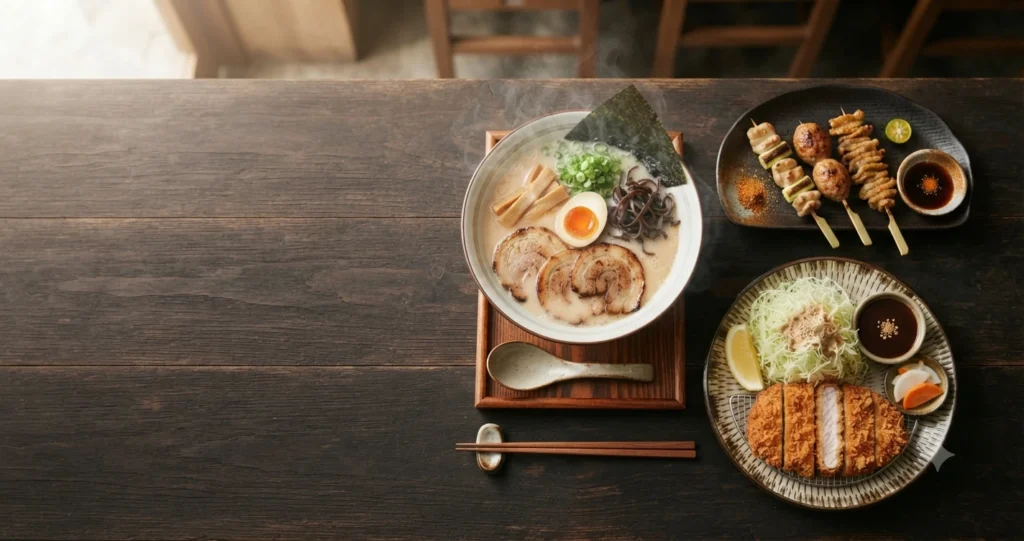
A good Japanese restaurant isn’t defined by its sushi rolls. Some of the best Japanese food in your town may come from a ramen shop, a yakitori grill, a tonkatsu house or a small soba counter, and their quality shows in the details: a short menu, real dashi, carefully cooked rice and staff who can explain what they serve.
This guide shows you how to spot a good Japanese restaurant beyond sushi, what to order on your first visit and which warning signs mean you should keep looking. It works in any US city, from a strip mall noodle shop to a quiet downtown counter.
What makes a good Japanese restaurant beyond sushi?
A good Japanese restaurant does a few things very well instead of everything at once. Look for a focused menu built around one specialty, stock made in house, rice and noodles treated with care, seasonal specials and staff who can explain each dish and drink. These signs matter far more than décor or a long list of rolls.
Japanese cooking puts the ingredient first. In December 2013, UNESCO added washoku, the traditional food culture of Japan, to its Representative List of the Intangible Cultural Heritage of Humanity. Japan’s nomination highlighted fresh ingredients, nutritional balance and respect for the changing seasons. A kitchen that follows those ideas usually shows it on the plate, even in a casual noodle shop.
You have plenty of options. A 2023 survey by Japan’s Ministry of Agriculture, Forestry and Fisheries counted about 26,040 Japanese restaurants in the United States, the second highest total of any country after China. With that many choices, knowing what to look for saves you money and a disappointing dinner.
What types of Japanese restaurants are there besides sushi bars?
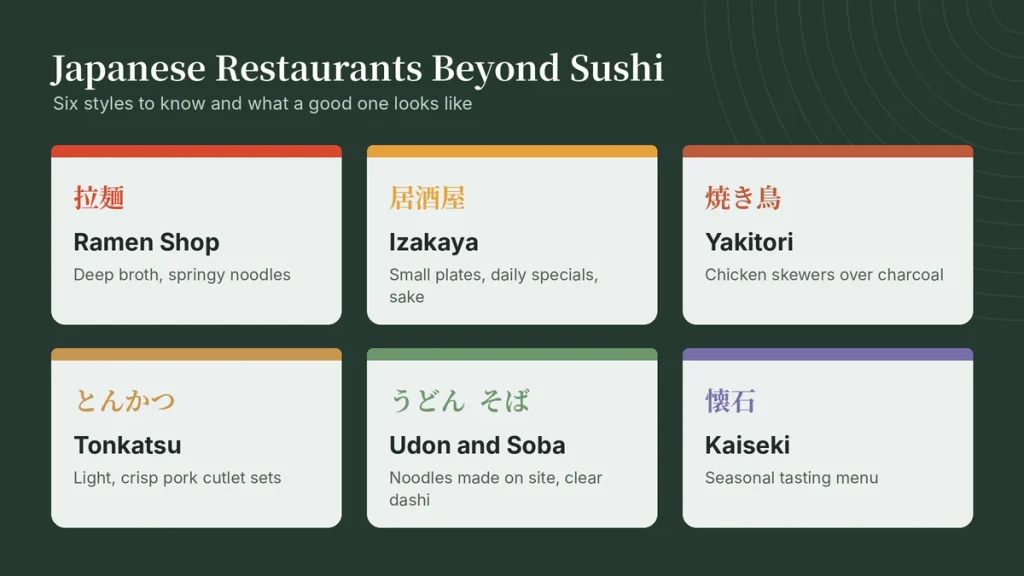
Many Japanese restaurants specialize in one style of food. Common types include ramen shops, izakaya (casual Japanese pubs serving small plates), yakitori grills, tonkatsu houses, udon and soba shops, donburi rice bowl counters and kaiseki, a formal seasonal tasting menu. Knowing the type tells you what a good Japanese restaurant of that style should look like.
| Type | What it serves | What a good one looks like | Price level |
|---|---|---|---|
| Ramen shop | Noodle soup in shoyu, shio, miso or tonkotsu broth | Broth with real depth, springy noodles, a few styles done well | $$ |
| Izakaya | Small shared plates, skewers, sake and beer | Daily specials board, a real sake list, food made for sharing | $$ |
| Yakitori grill | Chicken skewers grilled over charcoal | Visible grill, many cuts of chicken, a choice of salt or tare sauce | $$ |
| Tonkatsu house | Breaded, fried pork cutlet served as a set meal | Light, crisp crust, shredded cabbage, rice and miso soup | $$ |
| Udon or soba shop | Thick wheat udon or thin buckwheat soba, hot or cold | Noodles made on site, clear and fragrant broth | $ |
| Donburi counter | Rice bowls topped with beef, chicken, egg or fried items | Good rice, balanced sauce, quick service | $ |
| Kaiseki | Formal multicourse seasonal meal | Reservations required, menu that changes with the seasons | $$$$ |
Price levels are a general guide and vary by city. For example, a bowl at a traditional ramen shop in most US cities usually costs around $14 to $22, and extra toppings add a few dollars.
What are the signs of a good Japanese restaurant?
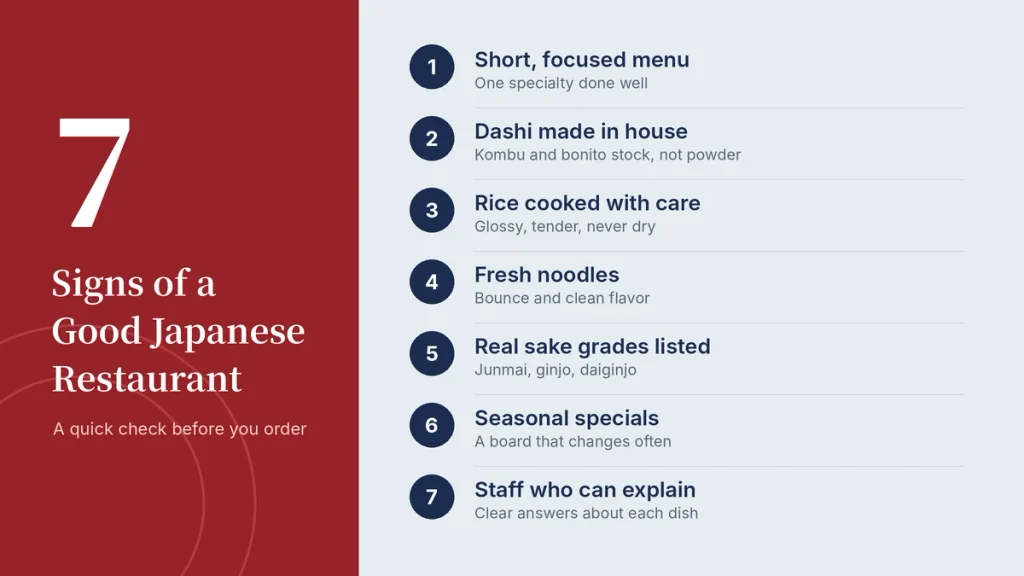
The clearest signs of a good Japanese restaurant are a short, specialized menu, dashi made in house, well cooked rice, fresh noodles, a thoughtful sake list, seasonal specials and staff who know the food. A place doesn’t need all seven, but one that shows four or five is usually worth your time and money.
1. Is the menu short and focused?
A ramen shop with four broths usually beats a place that also sells pad thai, teriyaki burritos and 40 rolls. Many restaurants in Japan perfect one dish for decades. A tight menu means fresher ingredients and cooks who make the same dish until it’s right.
2. Does a good Japanese restaurant make its own dashi?
Dashi is the basic Japanese soup stock, most often made from kombu (dried kelp) and katsuobushi (dried, smoked bonito flakes). It forms the base of miso soup, udon broth and many sauces. Ask your server whether the kitchen makes it in house. A good Japanese restaurant will answer with pride, while instant stock tends to taste flat and salty.
3. How does the plain rice taste?
Plain steamed rice tells you a lot, and a good Japanese restaurant treats it as seriously as the main dish. It should be glossy, slightly sticky and hold together without turning mushy. If the rice in a donburi bowl or tonkatsu set is dry or hard, the kitchen is cutting corners on the most basic thing it serves.
4. Are the noodles made fresh?
Many respected udon, soba and ramen shops make noodles on site, and some keep the noodle station in view of diners. Fresh noodles have bounce and a clean wheat or buckwheat flavor. Soggy noodles that fall apart usually sat too long or came from a bag.
5. Does the drink list show real sake grades?
A careful sake list names the brewery and the grade, not just “hot sake” or “cold sake.” Junmai means the sake is brewed with only rice, water and koji (a mold that turns rice starch into sugar), with no added alcohol. Ginjo uses rice polished to 60% or less of its original size, and daiginjo goes to 50% or less. Staff who can explain these terms usually care about pairing food and drink, too.
6. Are there seasonal or daily specials?
Seasonality sits at the heart of Japanese cooking. A board listing today’s fish, a winter hot pot or a summer cold noodle dish shows the kitchen buys fresh and cooks with the calendar. A fixed menu isn’t a deal breaker, but specials are a strong sign.
7. Can the staff explain what you’re ordering?
Ask what the chef recommends or how a dish is made. At a good Japanese restaurant, servers can tell you whether a broth is pork or chicken, which skewers sell out first and what drink pairs well with your meal. Vague answers often point to a kitchen that relies on frozen, premade food.
How can you tell if Kobe or wagyu beef on the menu is real?
Real Kobe beef comes only from Tajima strain Japanese Black cattle raised in Hyogo Prefecture, Japan, under rules set by the Kobe Beef Marketing and Distribution Promotion Association. Only restaurants registered with that association can sell it. A good Japanese restaurant that serves real Kobe beef will gladly show proof of registration, and you can also check the association’s website for its list of approved sellers.
Menu terms like “Kobe style” or “American wagyu” usually describe cattle raised outside Japan. That beef can be very good, but it isn’t Kobe beef, and the price should reflect that. If a “Kobe burger” costs about the same as a regular burger, the word is marketing, not a certified product.
What are the warning signs of a poor Japanese restaurant?
Common warning signs include a huge menu that mixes several Asian cuisines, dishes drowned in sweet sauce, lukewarm broth, dry rice, greasy tempura and staff who can’t answer simple questions. One issue might be an off night. Several together usually mean you haven’t found a good Japanese restaurant yet.
- Every dish arrives covered in the same thick teriyaki glaze or spicy mayo.
- Miso soup tastes like salt water with no depth.
- Tempura is dense, oily or soft instead of light and crisp.
- The “Japanese” menu also lists lo mein, pad thai and orange chicken.
- Recent reviews mention cold food, long waits or cleanliness problems.
- The latest health inspection score from your city or county is low.
What should you order on your first visit?
Order the dish the restaurant is named for or known for. At a ramen shop, try the house broth. At an izakaya, ask for two or three chef specials and a few skewers. At a tonkatsu house, get the classic pork loin set. The signature dish is where a good Japanese restaurant shows its skill.
These five dishes are also quick, honest tests of whether you’ve found a good Japanese restaurant:
- Agedashi tofu: lightly fried tofu in warm dashi broth, a simple test of the stock.
- Chawanmushi: a savory steamed egg custard that’s hard to fake.
- Karaage: Japanese fried chicken that should be juicy with a thin, crisp coating.
- Onigiri: a rice ball that shows you exactly how well the rice is cooked.
- Zaru soba: cold buckwheat noodles with dipping sauce, ideal for judging noodle texture.
Here’s a money saving tip: visit at lunch. Many good Japanese restaurants offer teishoku, a set meal with a main dish, rice, miso soup and pickles, often for less than a similar dinner.
How do you find a good Japanese restaurant near me?
Search for the specific style you want, such as “ramen near me” or “izakaya near me,” instead of just “Japanese food.” Then compare hours, photos and recent reviews. Search Acharya lets you browse local restaurants by city, check opening hours and phone numbers, and read reviews before you go.
When you read reviews, look for specifics. Comments about rich broth, fresh noodles or a chef who explains each course are far more useful than “great place.” Diner photos show real portion sizes and whether the food matches the menu pictures. You can browse local restaurants on Search Acharya, explore restaurants by city and state or start with a big food city like Houston to compare a few options side by side.
Do you own a Japanese restaurant?
If you run a ramen shop, izakaya or any Japanese restaurant, a free listing helps diners searching for a good Japanese restaurant near them find your hours, menu and phone number. Every listing on Search Acharya is reviewed before it goes live. Add your restaurant for free, then ask happy customers to leave a review that mentions their favorite dish.
Frequently asked questions
Is a Japanese restaurant with no sushi still authentic?
Yes. Many restaurants in Japan never serve sushi at all. Ramen shops, yakitori grills, tonkatsu houses and soba shops are separate traditions, and specializing in one of them is usually a sign of quality.
What is the difference between an izakaya and a regular Japanese restaurant?
An izakaya is a casual Japanese pub where people order small plates to share with sake, beer or highballs. A regular Japanese restaurant usually serves full meals or focuses on one specialty dish, such as ramen or tonkatsu.
How much does a bowl of ramen cost in the US?
At most traditional ramen shops, a bowl costs around $14 to $22. Extra toppings like chashu pork or a seasoned egg add a few dollars. Prices vary by city and by how much of the broth and noodles the shop makes itself.
What does omakase mean at a Japanese restaurant?
Omakase roughly means “I’ll leave it up to you” in Japanese. The chef chooses each course, usually based on what’s freshest that day. It’s most common at sushi counters, but some izakaya and kaiseki restaurants offer it too.
Is it rude to ask how a dish is made?
Not at all. Chefs and servers at a good Japanese restaurant are usually happy to explain their broth, noodles or sake. Asking also helps you judge how much the staff cares about the food.
Should I tip at Japanese restaurants in the US?
Yes. Tipping isn’t customary in Japan, but at sit down restaurants in the United States the usual practice applies, typically 15% to 20% of the bill. Check your receipt first, since some restaurants add a service charge.
How can I tell if a Japanese restaurant is good before I go?
Check whether the menu is short and focused, look at diner photos of the broth, rice and noodles, and read recent reviews for specific details. Comparing a few places on Search Acharya by hours, location and reviews is a quick way to narrow your list.